



Elevator Towers
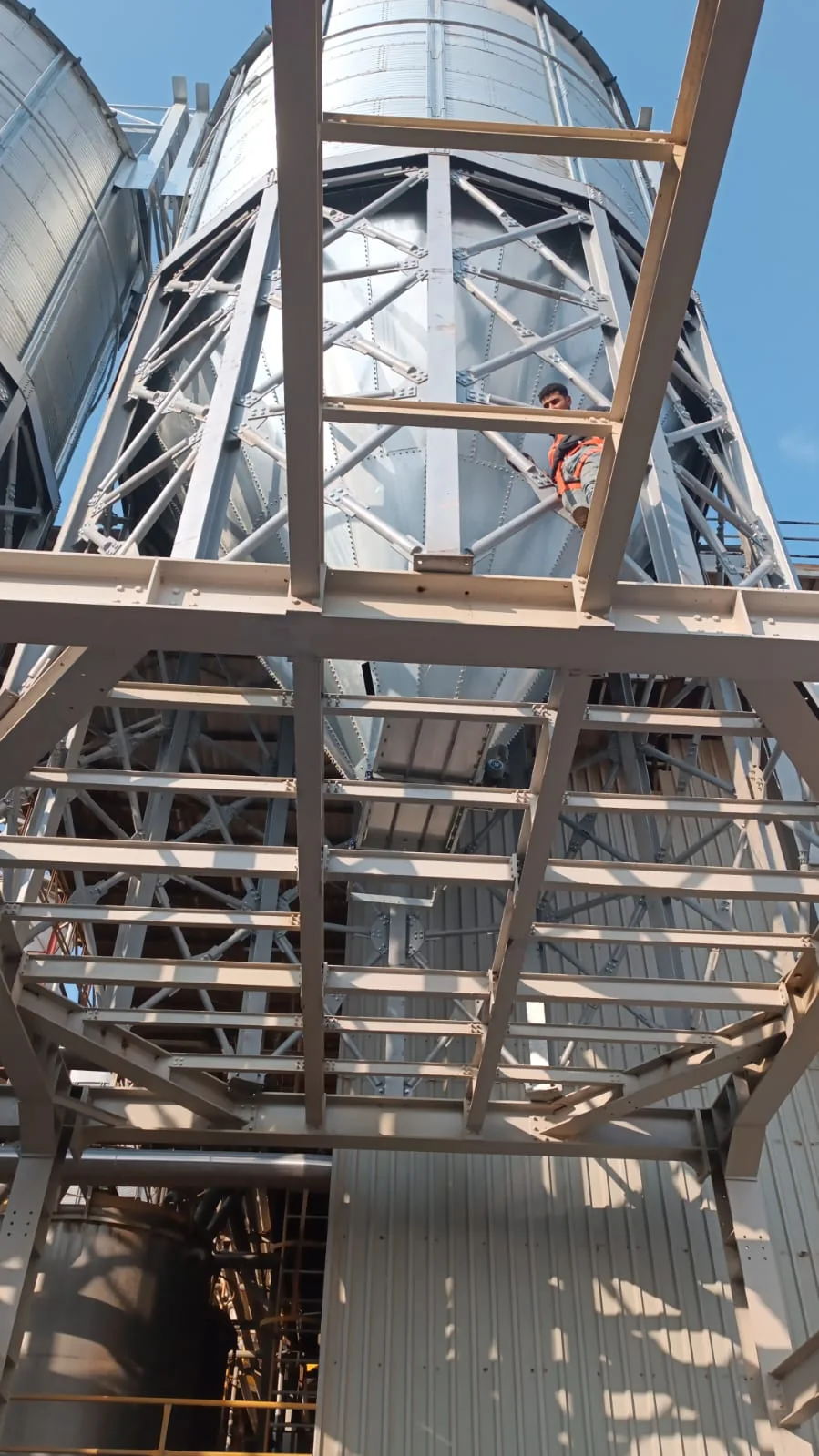
Elevator towers are steel support structures that carry bucket elevators and connected equipment, provide anchoring, and enable maintenance access. Tower design considers elevator height, equipment loads, site conditions, and wind effects. Structures supported by platforms and stairs contribute to safe, orderly system operation.
What Are Elevator Towers and How Do They Work?
An elevator tower is the main steel structure that carries vertical conveying equipment and related platforms. The tower is structurally engineered considering elevator height, equipment loads, wind effects, and maintenance access.
Key Features
- Stable support structure for bucket elevators and equipment
- Access via maintenance platforms and stairs
- Custom design for plant height and site conditions
- Ability to connect to conveyors and walkways
Applications
- Silo fill and discharge facilities
- Feed and flour mills
- Grain terminal and port projects
- High-elevation process conveying lines
Integration with Plant and Automation Systems
The tower is designed structurally and mechanically in harmony with the elevator, walkways, upper conveyors, maintenance platforms, and grain flow system.
Engineering and Product Selection
Elevator height, conveying capacity, number of platforms, connection loads, and environmental effects are key inputs for structural calculations.
Frequently Asked Questions
Its main role is supporting the elevator; depending on the project, it can also carry platforms, stairs, conveyors, and flow lines.
Height, equipment loads, wind conditions, and site connections differ at every facility.

30-Year Warranty
The galvanized material used is long-lasting

High Galvanized Coating
Durable and high-quality coating

Static Design
Correct static design through engineering analysis